Your First 3 Seconds Are Costing You Views: A Hook Audit You Can Do Right Now
Photo: Japanexperterna.se, CC BY-SA 2.0, via Wikimedia Commons
Scroll through your For You page right now and count how many videos actually make you stop. Maybe one in ten? Maybe one in twenty? Now flip it: that's exactly how people are treating YOUR content.
The hard truth about short-form video is that the algorithm doesn't reward good videos — it rewards good openings. If your first three seconds don't earn the next three, nothing else in your edit matters. Let's fix that with a proper audit.
Why the First Three Seconds Decide Everything
TikTok's ranking system watches what viewers do in the opening moments. If someone swipes away instantly, that's a hard signal your video isn't worth pushing. If they pause, rewatch, or stick past the halfway mark, you're cooking.
But viewers aren't being mean — they're being efficient. They're scrolling a feed where a new video loads every second or two. Your opening has to do two jobs at once: stop the thumb AND promise a payoff. Most creators only do one, usually neither.
The Three Hook Patterns That Actually Work
Before you audit your own videos, know what you're auditing against. Watch any batch of viral TikToks and you'll see the same structural moves over and over.
The mid-action start. The video begins in the middle of something — a sentence, a mess, an argument, a recipe already half-done. No intros, no "hey guys." You feel like you walked into a room mid-conversation, and your brain needs to catch up, so you stay.
The visual interrupt. Something on screen breaks the pattern of the feed: a sudden cut, a weird object, an unexpected movement, a face way too close to the camera. It doesn't have to be loud — it just has to be different from everything around it.
The text tease. An overlay that opens a loop without closing it: "I can't believe this worked," "Wait for the end," "POV: you just found out..." The viewer now has an unfinished question in their head and only one way to resolve it.
The best hooks stack two or three of these. Mid-action start PLUS text tease is basically the house style of every big US creator right now.
Your 3-Second Audit: A Step-by-Step
Pull up your last five videos and go through this checklist for each one. Be brutally honest — you're diagnosing, not defending.
Step 1: Mute it and watch. Just the visuals. Does something visually interesting happen in the first second, or is it you standing in your kitchen warming up to talk? If the frame is static, that's strike one.
Step 2: Watch with sound only. No visuals. Does the audio start with energy — a sound, a statement, something happening? Or is there dead air, a breath, or "so basically..."? Strike two.
Step 3: Read the first text overlay. Does it create curiosity, or does it just label the video ("making pasta")? Labels inform. Teases withhold. You want withholding.
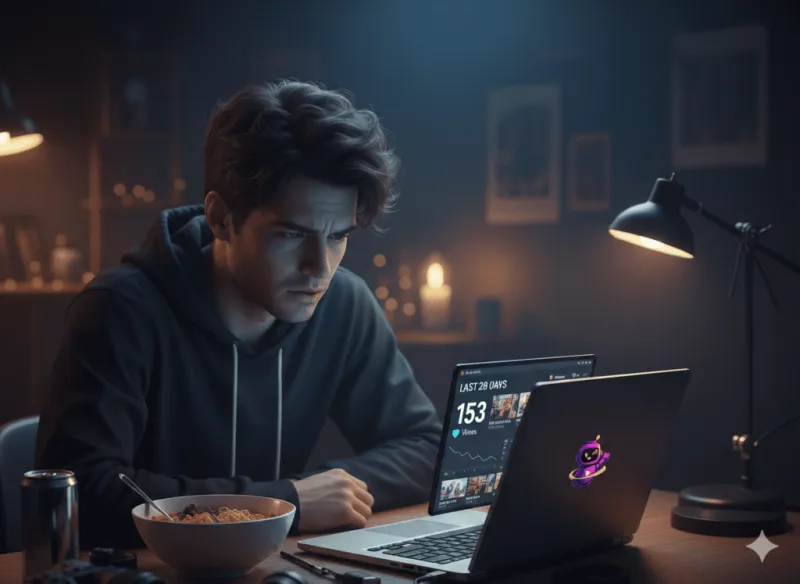
Step 4: Find the bail point. Check your analytics for average watch time and where the drop-off happens. If people leave at second one, your hook never landed. If they leave at second four or five, your hook worked but your payoff setup didn't — different problem, different fix.
Step 5: Compare against a viral video. Open one video in your niche that did numbers this week. Watch its first three seconds three times. Write down exactly what it did. Not the topic — the structure.
A Swipe File of Hooks You Can Steal
Keep this list handy when you're filming. These are templates, not scripts — drop your own topic into the slot.
- "I tried [trend] for a week and I have thoughts."
- Start mid-sentence: "...and that's the third time this month it's happened."
- "Nobody's talking about this part of [topic]."
- Show the finished result first, then rewind: "This took me 20 minutes. Here's how."
- "If you're [specific type of person], stop scrolling."
- Put the mess/conflict on screen first, explain second.
- "This is your sign to [action] — but read this first."
- Text tease over chaos: "long story."
Notice how none of these start with a greeting, a name drop, or a summary of what the video is about. That's not an accident.
The One Habit That Changes Everything
Here's the practical takeaway: film your hook separately from your video. Shoot your content like normal, then spend five extra minutes filming two or three different openings for it. Test them. Most creators treat the hook as the first thing they say, when it should be the thing they craft last — the packaging, not the product.
Your content probably isn't the problem. Your packaging is. Fix the first three seconds and watch what happens to the other 57.